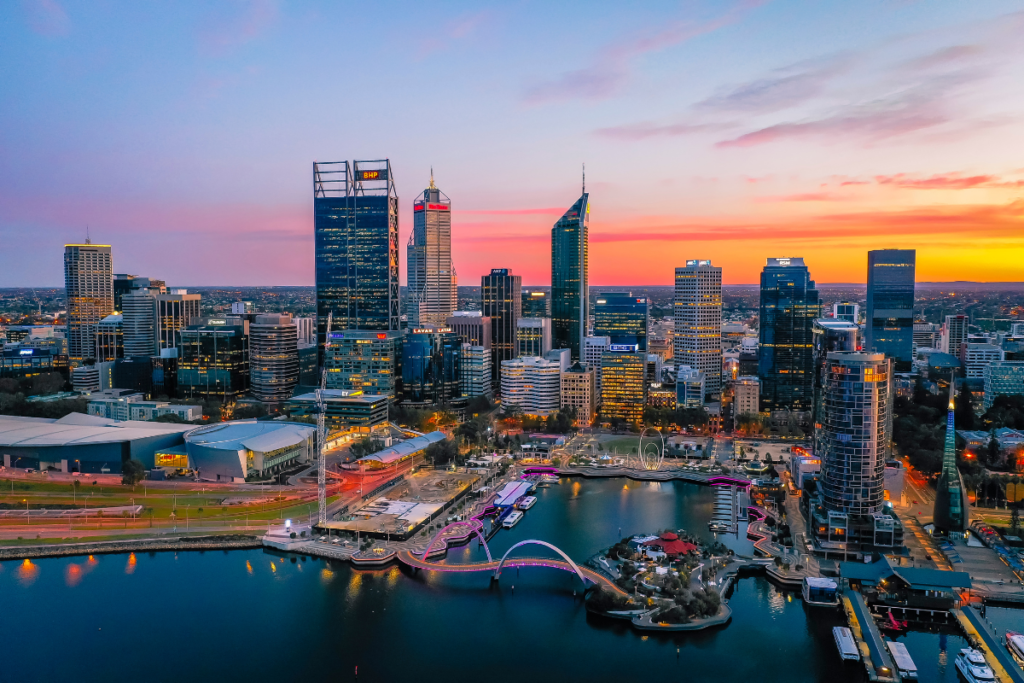
Perth has long operated on its own rhythm, running a different cycle to Sydney and Melbourne, shaped by resources, migration, and a lifestyle that continues to draw people from across the country and beyond. In 2026, that rhythm is louder than ever. With the strongest price growth forecast of any Australian capital city, record low vacancy rates, and a supply shortage that shows no sign of easing, Perth is firmly in the national spotlight. Here is what buyers, investors, and anyone watching the market needs to know.
The Price Growth Story
The numbers out of Perth are hard to ignore. The median house price is expected to rise by more than 10% in 2026, while the median unit price is forecast to see growth of between 15% and 20%, according to REIWA. That is not a blip. It is the continuation of a market that has been consistently outperforming the national average for several years running.
KPMG’s latest Residential Property Outlook predicts Perth house prices are set to grow by almost 13% over the next 12 months, the highest forecast of any capital city and well above earlier expectations. For context, that puts Perth ahead of Brisbane, Adelaide, Sydney, and Melbourne by a considerable margin.
To put the pace of Perth’s growth in perspective, the 10-year average for dwelling price growth sits at 4.4%. Even at a forecast rate of 8%, Perth would still be running at nearly double its long-run average.
What is driving this? The answer, consistent across every major research body, comes down to one thing: a severe and ongoing imbalance between supply and demand.
Perth currently has around 5,000 active listings. In a balanced market, that number should sit between 12,000 and 13,000. Supply is sitting at roughly 40% of equilibrium, and thousands of buyers are competing for limited stock. Until that gap closes, which few analysts expect to happen in the near term, upward pressure on prices is not going anywhere.
The Unit Market Is Having Its Moment
One of the more interesting shifts in the Perth market is the growing momentum in the unit sector. As houses have become less affordable, more buyers have turned to the unit market, which includes villas, townhouses, home units, flats, and apartments. This redirection of demand saw price growth in the unit market surpass median house price growth in 2025, and the trend is expected to continue into 2026.
For investors, this creates a compelling opportunity at a lower entry point. Well-connected inner-ring suburbs are recording annual unit price growth well above 20%, with some delivering five-year growth figures approaching and exceeding 60% to 70% according to OpenAgent data. Entry prices in these pockets remain accessible relative to what comparable assets cost in Sydney or Melbourne.
These are not fringe locations chasing speculative attention. They are established, well-serviced areas where the fundamentals of demand, infrastructure, and lifestyle appeal are firmly in place. If you are considering a Perth investment and want guidance on how to assess these opportunities, the Propsearch investment property services team identifies high-potential properties across Australia with a strategy-first approach.
Interstate Migration: The Ongoing Factor
Perth’s growth story cannot be told without discussing migration. Population growth remains high, with Perth recording 2.2% growth in the year to June. That figure represents one of the strongest population growth rates of any Australian capital, and it is being fed by a steady stream of interstate arrivals choosing Perth for affordability, lifestyle, and employment.
Relative to Sydney and Melbourne, Perth’s affordability advantage remains stark. Sydney’s median house price sits above $1.45 million and Melbourne’s sits around $980,000, while Perth’s median sits around $780,000. That gap of between 30% and 45% is pulling investors, families, and first home buyers westward.
Interstate migration from New South Wales and Victoria has risen significantly over the past decade as buyers seek relief from eastern seaboard affordability pressures. And with major infrastructure projects reshaping Perth’s connectivity and liveability, the appeal only deepens.
Net interstate migration to Western Australia remained strong through 2025, with over 10,000 people arriving every quarter. That is a sustained and significant flow of demand that the housing market has simply not been able to keep up with. Understanding how to move on this kind of market intelligence is exactly what the team at Propsearch does for buyers across the country.
Where the Opportunities Are in 2026
With the broader market performing strongly, the question for buyers and investors is where the best opportunities sit. Buyers agents and analysts are broadly pointing to three types of locations attracting serious attention heading into the rest of the year.
Inner-ring suburbs within close reach of the CBD continue to lead on capital growth, particularly in the unit market. Proximity to universities, hospitals, and lifestyle amenity is driving consistent tenant and owner-occupier demand, with low days on market and strong competition for available stock.
Northern coastal corridors are drawing buyers priced out of the inner ring but still seeking lifestyle value. Areas with direct access to beaches, freeways, and train infrastructure are crossing new price thresholds, with several locations recently passing the $1 million median house price mark on the back of 15% annual growth.
Southern and outer-ring growth corridors are attracting yield-focused investors who want strong returns at a lower entry price. Rental vacancy rates in high-demand zones within these corridors have consistently sat below 1.2%, and gross yields in some areas are running above 5.5%.
For those with a longer time horizon and a yield-first strategy, established family-oriented growth corridors offer relative affordability, strong rental demand, and infrastructure-backed upside that makes them worth serious consideration according to market research from Loan Market.
The Rental Market and Investment Case
Rental supply in Perth is extremely tight, with vacancy rates sitting below 1% as of January 2026 and ongoing upward pressure on rents continuing to build. For investors, this means tenant competition is fierce, arrears remain low, and the income side of the investment equation is as solid as it has been in years.
The average gross rental yield in Perth sits around 5.2%, making it a highly attractive option for investors when compared to Sydney and Melbourne. Interstate investor enquiries for Perth properties rose by nearly 50% in 2025.
With rental yields at 5.3% compared to 3.3% in Sydney, investors find Perth increasingly attractive, particularly as borrowing costs shift. Mid-tier growth corridors are capturing a growing share of this attention, with strong tenant demand and entry prices that remain accessible relative to the eastern capitals.
What to Watch for the Rest of the Year
After three rate cuts in 2025, the general consensus is that at best there will be no further reductions in 2026, and at worst there may be several increases. Should interest rates rise more than once, market activity could decrease, particularly in the first home buyer segment.
A 0.25 percentage point RBA cash rate rise in early February 2026 and new limits on high debt-to-income lending from 1 February 2026 are likely to tighten borrowing for some buyers. The market is watching closely, but the underlying fundamentals of population growth, supply shortage, and strong employment continue to provide a solid floor.
Perth is not immune to broader economic forces. But it enters the second quarter of 2026 with more structural support behind it than most markets. For buyers and investors who understand the fundamentals and are willing to act with clear strategy, the conditions in Perth remain among the most compelling in the country. The Propsearch team, with more than 20 years of international and local market experience, works with buyers across Sydney and nationally to navigate exactly these kinds of opportunities.
Frequently Asked Questions: Perth Property Market 2026
Perth is forecast to be the strongest performing capital city in Australia in 2026. REIWA expects house prices to rise by more than 10 per cent, while KPMG puts the forecast at close to 13 per cent. Unit prices are tipped to grow between 15 and 20 per cent. The core driver is a significant undersupply of housing against persistently strong population and migration demand.
Yes, according to all major forecasters. REIWA, KPMG, ANZ, and Westpac all expect continued price growth in 2026, though the rate is moderating compared to the extraordinary growth seen in 2024. Perth’s active listing count sits at roughly 40 per cent of what a balanced market requires, which means buyer competition and upward price pressure are likely to persist throughout the year.
Perth’s median dwelling value reached approximately $1 million in early 2026, according to recent market data. The median house price across the metro area closed 2025 at record highs, with units also ending the year at their strongest levels on record.
Buyers agents and analysts are pointing to three broad opportunity types: inner-ring suburbs with strong unit market growth and lifestyle appeal; northern coastal corridors with beach access and improving transport links; and southern and outer-ring growth corridors offering higher yields at more accessible entry prices. Each suits a different investment strategy and time horizon.
Perth offers some of the most compelling investment fundamentals of any Australian capital city in 2026. Gross rental yields average around 5.2 per cent, vacancy rates sit below 1 per cent, and interstate investor enquiries for Perth properties rose by nearly 50 per cent in 2025. Compared to Sydney and Melbourne, Perth still offers a significant affordability advantage, which continues to attract both owner-occupiers and investors from the eastern states.
The primary driver is affordability. Perth’s median house price is between 30 and 45 per cent below Sydney and Melbourne, making it an attractive destination for buyers priced out of the eastern capitals. Employment opportunities tied to Western Australia’s resources, construction, and renewable energy sectors are also drawing new residents. Net interstate migration to Western Australia remained above 10,000 arrivals per quarter through 2025.
Perth’s rental vacancy rate sat below 1 per cent as of January 2026, making it one of the tightest rental markets in the country. Median house rent closed 2025 at $700 per week, while median unit rent reached $680 per week. REIWA expects rental price growth to continue in 2026, though at a more moderate pace than the sharp increases recorded in 2024.